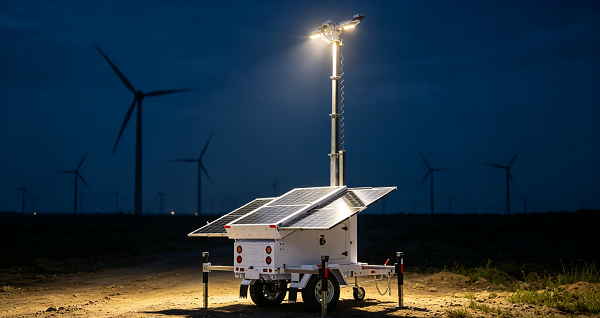
Renewable Lighting for Remote Work Sites: No Grid? No Generator? No ProblemPosted by Stephen Shickadance in Most Popular. Industry News. Inspiring Projects.If you’re running lights on a remote site, you already know the two usual options both have problems. Trenching power in is slow and expensive, and half the time the site moves before the permit clears. Diesel gensets work, but you’re babysitting fuel deliveries, logging runtime, swapping filters, and eating the noise and fumes complaints. Solar lighting towers cut both of those out — the question isn’t whether they work, it’s whether you’re spec’ing them right for the load and the latitude. Here’s the part that actually matters when you’re buying.
It Lives and Dies on Battery Autonomy, Not LumensEveryone fixates on fixture wattage. The real failure point on remote solar is days of autonomy — how many no-sun days the bank carries before the lights start dimming or cutting out. Spec autonomy against your worst-case site, not your brochure site. A tower rated for “all night runtime” in San Diego in June is a very different machine in a northern winter or a dusty monsoon stretch. If you’re running 12+ hour nights or stacking cloudy days, you want the battery sized so the controller never has to start dropping output to protect the cells. Once the system starts dimming to survive, you’ve effectively lost the light when you need it most. Two practical rules:
Solar Charge Window Is the Other Half of the EquationA big battery with an undersized panel is a slow leak. You need the array to fully recover the bank during your available winter sun hours, not your summer peak. This is where a lot of cheap towers quietly fail — they pass the summer demo and then brown out in November. When you’re comparing units, ask for the panel watt to battery Wh ratio and the assumed peak-sun-hours behind the runtime claim. If a vendor quotes runtime without stating the PSH assumption, the number is marketing, not engineering. Push them for the worst-month recovery calc for your coordinates.
Mechanical and Structural — The Boring Stuff That Strands UnitsThe optical and electrical specs get all the attention, but the units that actually fail in the field fail mechanically:
Where the Numbers Actually Win vs. DieselThe case isn’t “solar is greener.” The case is total cost of ownership over the deployment life. Run it honestly:
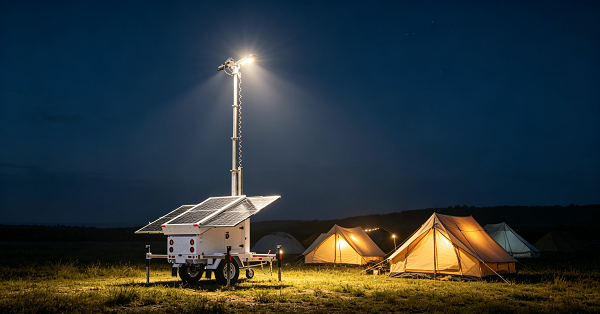
On a single one-month job, diesel can still pencil out. On anything multi-season or anywhere fuel logistics are painful (long hauls, restricted access, ESG-scrutinized clients), solar wins clearly — and it wins harder the more remote and longer the deployment. The trap is buying one cheap tower, watching it brown out in bad weather because it was undersized, and concluding “solar doesn’t work here.” It works. It just has to be sized to the worst month and the real load. Key Applications for Solar Lighting at Remote Work SitesConstruction Sites — Highway, Bridge, and Infrastructure ProjectsRoad and bridge projects often advance along a corridor, meaning lighting needs to move as work progresses. Solar light towers can be relocated easily, unlike grid‑tied lighting that is fixed. They also eliminate the need for temporary utility service, which can add months to project schedules. Mining Exploration and DevelopmentExploration camps and early‑stage mine sites typically have no grid access. Diesel lighting imposes heavy fuel logistics on remote helicopter‑ or truck‑supported operations. Solar allows exploration teams to focus on drilling, not refueling. Oil and Gas Well PadsDrilling and fracking operations run 24/7, often in remote basins. Solar lighting provides consistent illumination for equipment yards, wellheads, and security perimeters without the fire risk of diesel storage or the noise that can disturb nearby landowners. Telecommunications and Tower SitesCellular and broadcast towers are often located on hilltops miles from the nearest power line. Solar lighting for equipment compounds and access roads ensures maintenance crews can work safely after dark and deters vandalism. Disaster Recovery and Emergency ResponseAfter hurricanes, floods, or wildfires, fuel supplies are often disrupted. Solar light towers can be airlifted into cut‑off areas and provide immediate, self‑sufficient lighting for search and rescue, medical triage, and supply distribution — without waiting for fuel convoys. Temporary Events and Staging AreasMusic festivals, film sets, sporting events, and military staging areas need lighting for short durations in locations without existing infrastructure. Solar towers deploy in hours and pack up just as quickly, leaving no trenching scars or utility bills behind. Spec Checklist Before You BuyWhen you’re comparing units side by side, get these on the table for every quote:
A vendor who can answer all of that without dodging is one worth buying from. One who only wants to talk about lumens and “all-night runtime” is selling you a summer demo. No grid, no generator — but only if it’s sized for your worst month, not your best. Get the autonomy and the recovery math right up front, and the rest of the deployment takes care of itself.
Most Popular
Industry News
Inspiring Projects
|
ArchivesNo Archives Categories
Want More Info? |
LATEST NEWS & ARTICLES