Solar Lighting at Santa Monica Airport – A Case Study in Off-Grid SecurityPosted by Stephen Shickadance in Most Popular. Industry News. Inspiring Projects. Applications of Solar Lighting. Solar Lighting Design.Before solar, the airport had archaic, malfunctioning lights. After a site‑specific retrofit, the parking lots are illuminated by self‑contained solar systems that are immune to copper theft, require no trenching, and run entirely off‑grid. An Unlikely Testing Ground for Solar Security Santa Monica Airport sits three miles inland from the Pacific Ocean. For years, it has been best known for its aviation history, its influential 4,000‑foot runway, and a persistent debate over its future. The airport is scheduled to close permanently after December 31, 2028, after which the 192‑acre site will be reimagined as a public park known as the Santa Monica Airport Conversion Project. Before that transformation begins, the facility remains responsible for safe, secure day‑to‑day operations. But for a facility that runs 24 hours a day, one obstacle stood out: lighting that simply didn't work. By the mid‑2010s, the airport’s parking lots were plagued by outdated, failing fixtures. The areas were frequented in the evenings by tenants, visitors, arts patrons, and event attendees, and many of these parking zones “previously had little or no lights.” With a dated grid that demanded expensive ongoing repairs and a rising tide of copper wire theft across Los Angeles, the city needed a lighting solution that would bypass both problems permanently. The answer was solar.
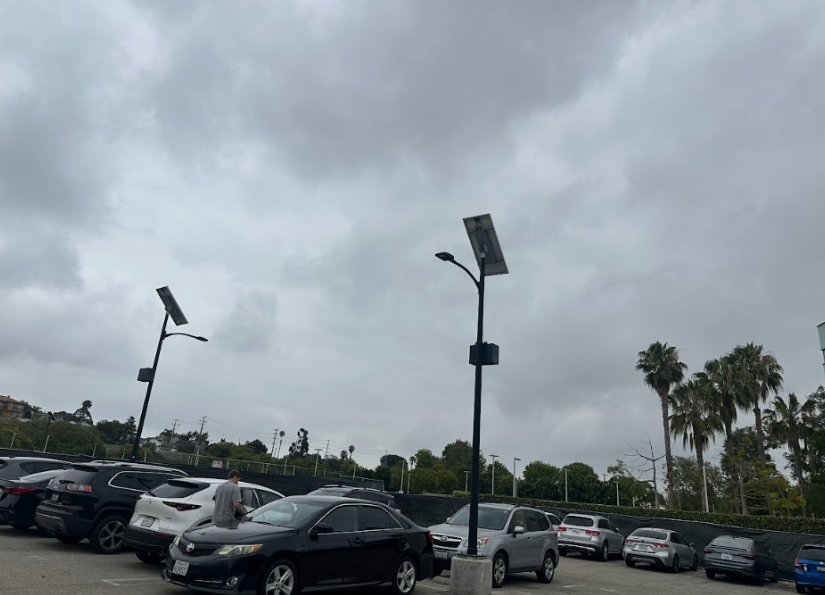
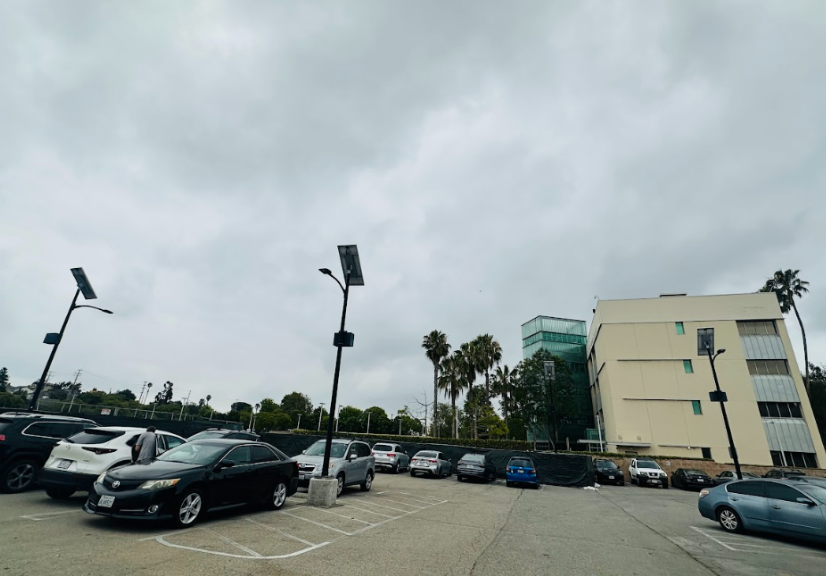
The Problem: Archaic, Expensive, and Vulnerable LightingThe airport’s original lighting relied on incandescent fixtures that had become obsolete and unreliable. Many were inoperable. The city knew that replacing them with conventional grid‑tied LED fixtures would bring its own headaches: trenching across asphalt, permit delays, long‑term electricity bills, and an ever‑present risk of copper wire theft—a crisis that has overwhelmed Los Angeles in recent years. Repair costs tell the story. According to Mayor Karen Bass’s office, repairs caused by copper wire theft cost at least four times more than standard maintenance. The city currently operates more than 220,000 street lights; an estimated 60,000 of them are eligible for solar conversion. In Los Angeles County, AT&T copper theft incidents increased by approximately 353 percent from 2024 to 2025, and in 2025 alone the company experienced over 7,300 copper theft incidents in California, with losses exceeding $54 million. In other words, any system that buried copper wire anywhere on the airport property was effectively a target. Solar offered a different path: move the energy source to the pole, remove the copper from the equation, and eliminate the recurring theft‑repair‑retheft cycle. The Solution: A Custom Retrofitted Solar Parking Lot SystemIn 2018, the City of Santa Monica partnered with our company to assess the aging lighting infrastructure. Our team conducted a site walk and made a critical observation: the existing concrete foundations and bolt patterns were still in excellent condition and could be reused. This discovery was pivotal. Instead of excavating the lot to pour new foundations—a process that would have cost tens of thousands of dollars—We took exact measurements of the existing bolt pattern and manufactured 44 Type III Brighta30 solar parking lot lights specifically designed to retrofit onto the existing concrete pedestals. Each light was a self‑contained system: solar panel, gel battery, LED luminaire, and charge controller, all mounted on the pole. The fixtures were installed on existing foundations, which allowed the city to “save tens of thousands of dollars by avoiding the need to dig up and replace the existing concrete pedestals.” The Brighta30 Type III distribution provided excellent coverage across the lots without the need for a new lighting layout or expensive pedestals.
Nearly 50 of these solar‑LED combination lights were placed in parking lots along the south side of the airport. Each unit runs completely off‑grid, with “no power lines or conduit connections required.” The solar panels are sized to store more than three days’ worth of power at a time to ensure consistent operation during overcast conditions.
What Made the Project SuccessfulSeveral design and execution decisions turned this project into a replicable model for other public and commercial sites. 1. Foundation reuse eliminated the cost and disruption of trenching. Instead of digging up the parking lot to run new conduit, Greenshine measured the existing bolt pattern and manufactured lights that fit exactly onto the existing bases. This customization saved the city tens of thousands of dollars and shaved months off the project schedule. 2. The system achieved genuine off‑grid independence. Because the lights generate and store their own energy, they do not draw from the city’s utility supply. This eliminates ongoing electricity costs, avoids the need for permits or utility coordination, and provides uninterrupted operation even if the grid goes down. 3. The design specifically addressed the copper theft crisis. Traditional grid‑tied parking lot lighting relies on copper wiring that runs underground from pole to pole, making it an irresistible target for organized theft rings. The solar units have no underground copper. There is nothing to steal, no conduit to breach, no outage risk from theft. This immunity is the single most important security feature of solar lighting for Los Angeles properties today. 4. The lighting supports all‑night security needs. The Brighta30 units are typically programmed to run at full brightness for the first 5 hours after dusk, then dim to 40% for the rest of the night — providing continuous illumination from dusk until dawn without any dark gaps. The system is sized for three days of autonomy, meaning even during consecutive overcast winter days in Southern California, the lights remain fully operational. Upgrading the System: A 2025 Retrofit Brings New LED EfficiencyBy 2025, the original solar units were showing their age. The city budgeted a new Airport Lighting Retrofit Project to replace them with state‑of‑the‑art LED fixtures. The project was designed to “enhance the sustainability and the security of Airport facilities by replacing the existing exterior lighting systems and reducing their overall energy consumption.” The retrofit scope was significant: roughly 254 incandescent light fixtures converted to LED, and 41 PV (solar) LED fixtures restored to full operation. The new LED fixtures consume 52 percent less energy than the original incandescent lighting they replaced, which will save the city an estimated $2,100 per year in utility costs while “enhancing security throughout the Airport by improving visibility, while being dark‑sky friendly where possible.” The city awarded the construction contract to Clear Blue Energy Corporation in an amount not to exceed $419,786, a reflection of its ongoing commitment to solar as the default infrastructure choice for a site that will eventually be decommissioned. Broader Implications: What Santa Monica Airport Teaches Other PropertiesSanta Monica Airport is not a typical commercial property—it sits on public land with a firm closure date in 2028. Yet precisely because its future is finite, it illustrates a compelling case for solar lighting that applies to warehouses, corporate campuses, distribution centers, and parking facilities across Southern California.
The Growing Momentum for Solar Infrastructure in Los AngelesSanta Monica Airport‘s experience is not an isolated case. In March 2026, Mayor Karen Bass launched a historic Street Lights Initiative that will repair and replace up to 60,000 street lights across Los Angeles citywide. The program specifically harnesses solar street light technology to “combat copper wire theft” and slash the city‘s decade‑long backlog of repair requests, which stands at over 32,000 pending service requests. City officials have been explicit about why solar is the preferred replacement: “Solar street lights also do not utilize copper wire and are therefore less vulnerable to theft, more cost‑effective over time, and help reduce emissions.” Councilwoman Monica Rodriguez, who joined Bass at the announcement, noted that the initiative “moves us toward more secure, solar‑powered street lights that are less vulnerable to theft.” The same logic that drove Santa Monica Airport to solar in 2018 is now being applied at a citywide scale across Los Angeles. If copper theft can cripple a public street light network of 220,000 poles, no private parking lot or warehouse yard with conventional grid‑tied lighting is immune. In 2025 alone, AT&T experienced more than 7,300 copper theft incidents in California with losses exceeding $54 million. The company described the problem as “systemic” to the point that it is struggling to keep up: “We can‘t repair damage as fast as it happens. Some damage goes undetected for weeks or months.” For a commercial property, every day the lights are out is a day of liability exposure, security gaps, and tenant dissatisfaction. A Blueprint for Off‑Grid SecuritySanta Monica Airport did not choose solar lighting for environmental idealism. The airport chose it because its old lighting was failing, trenching new fixtures was cost‑prohibitive, and copper theft made any buried wire an unacceptable risk. The solution—retrofitted solar parking lot lights—worked so well that the city upgraded the system again in 2025 to extend its life through the facility‘s remaining years. For any property owner in Southern California, the lessons are direct and actionable:
As Los Angeles replaces 60,000 city street lights with solar, the message is clear: renewable lighting is no longer an experiment. It is the new standard for secure, cost‑effective, and theft‑proof infrastructure. Santa Monica Airport proved it eight years ago. The rest of the city is catching up. Ready to secure your property with solar lighting? Request a free site assessment and see how retrofitting your existing poles can eliminate copper theft risk while lowering your long‑term costs.
Most Popular
Industry News
Inspiring Projects
Applications of Solar Lighting
Solar Lighting Design
|
ArchivesNo Archives Categories
Want More Info? |
LATEST NEWS & ARTICLES