Montana’s Extreme Weather Demands Rugged Solar Light Towers for Mine SecurityPosted by Stephen Shickadance in Most Popular. Industry News. Inspiring Projects. Applications of Solar Lighting.Montana is mining country. From the copper and molybdenum operations in Butte to the world-class platinum and palladium mines in the Stillwater district, the Treasure State ranks among the nation’s most important hard-rock mining jurisdictions. Hard-rock mining provides more than 18,000 good-paying jobs for Montanans, adds nearly $430 million to the state’s economy and provides an essential tax base for local communities. These mines supply critical minerals for everything from electric vehicle batteries to industrial catalysts. But operating mines in Montana means confronting an environment that is unforgiving, unpredictable and relentlessly extreme.
Traditional diesel light towers, the industry standard for site security and operational lighting, consistently fail in Montana’s brutal winters. Fuel gels at -40°F. Engines refuse to start. Diesel deliveries become impossible when snow closes mountain passes for days. And when the lights go dark, so do safety, security and compliance. Solar light towers, purpose-engineered for the harshest climates on Earth, offer a solution that thrives where diesel fails — with zero fuel costs, extreme-cold reliability and the ability to qualify for the 30% federal Investment Tax Credit (ITC). Montana’s Mining Landscape: Remote by Geography, Extreme by ClimateMontana is home to some of the world’s most significant mineral deposits — copper, molybdenum, gold, silver, platinum and palladium — but these riches are often located in some of the state’s most remote and weather-beaten terrain. The Continental Mine in Butte, operated by Montana Resources, is a major copper and molybdenum producer that employs more than 350 people and has been in operation since 1986. The Continental — America’s only operating open pit copper and molybdenum mine — comprises the Berkeley Pit, an active open pit copper mine, and the Continental deep copper and molybdenum underground mine. The Stillwater Mine near Nye, owned by Sibanye-Stillwater, is the only primary platinum and palladium mine in the United States. The facility has accounted for nearly 6% of Montana’s entire economic output, with thousands of workers commuting over mountain passes — even in the dead of winter. Dozens of exploration projects are active across the state. Domestic Metals is advancing the Smart Creek copper-gold-silver project, a joint venture with Rio Tinto, where recent assays have returned up to 102 grams per tonne gold, 23.1% copper and 3,810 g/t silver. Stillwater Critical Minerals is expanding drilling along a 10-kilometer mineralized trend at Stillwater West targeting nickel, copper, cobalt and PGEs. These are not small operations — they are major industrial facilities that require robust, year-round security lighting, regardless of what the thermometer says. The problem is that Montana’s thermometer frequently says things that make diesel equipment unusable.
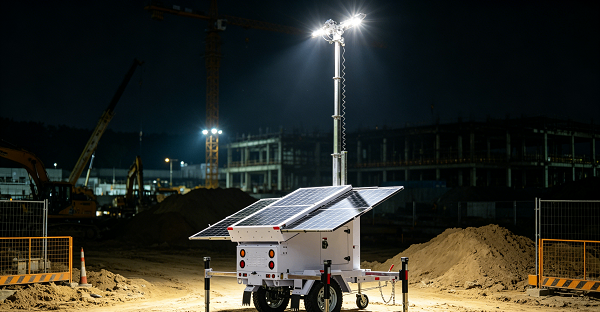
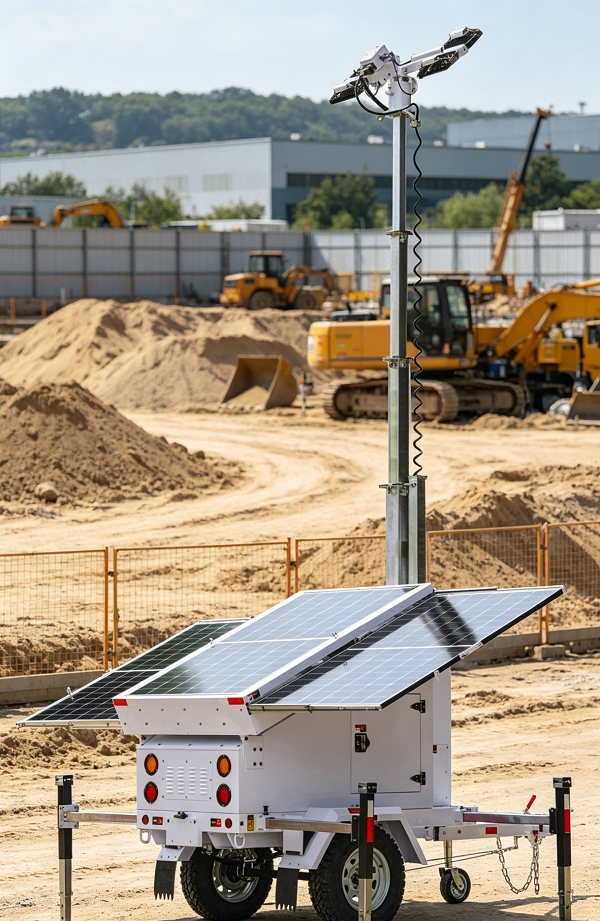
The Diesel Dilemma: Fuel That Freezes and Roads That CloseDiesel engines are notoriously unreliable in extreme cold. Montana’s winters routinely produce conditions that shut down standard diesel-powered lighting towers. Fuel gels. When temperatures drop to -40°F, diesel fuel turns into sludge. Untreated diesel begins to gel at -10°F; even treated fuel loses reliability at -40°F. Mines must purchase expensive anti-gel additives, switch to #1 diesel (which has less energy content and is harder to source) or both — adding significant cost and logistical complexity. Engines fail to start. Cold cranking batteries lose up to 60% of their power at -20°F. Diesel light towers that sit idle for even a few hours may not restart without a boost — a critical failure for security lighting that must work every night without exception. Block heaters require power. Diesel engines require block heaters to start in Montana winters, meaning each tower must be plugged in when not running — a significant power burden that many remote mine sites cannot easily accommodate. Maintenance becomes a logistical nightmare. Cold-weather repairs require heated bays. Frozen hydraulic lines break. Rubber seals crack. Fuel filters clog with gelled wax. Every service call sends a technician into dangerous cold — a safety risk in itself. Diesel deliveries stop. Montana’s mountain passes close during winter storms. Highways become impassable. And when fuel deliveries stop, diesel generators run dry — leaving pits, haul roads, equipment yards and security perimeters completely dark. Solar Light Towers: Built for Montana’s Harshest ConditionsSolar light towers might seem counterintuitive for a region where winter temperatures drop to -40°F. But modern systems are engineered specifically for high-latitude, extreme-cold environments — and Montana’s mines are proving that solar works when diesel fails. Cold-Weather Battery TechnologyUnlike diesel engines that require block heaters and struggle to start in subzero conditions, our solar towers use gel lead-acid batteries engineered to operate reliably down to -40°C (-40°F). These batteries do not freeze — the electrolyte is immobilized in a gel — maintain consistent voltage in extreme cold, require no engine block heaters or warm storage, and deliver 2,500+ cycles (approximately 5–7 years of service). Reliable energy storage acts as the backbone for solar light tower performance in off-grid zones, and thermal stability ensures that solar-powered lighting towers remain operational during peak winter demands. No Moving Parts to FailOur towers have no engines, no fuel pumps, no injectors and no hydraulic systems. The only moving parts are the optional manual mast lift. This simplicity is a superpower in the Montana winter: nothing to freeze, nothing to break, nothing to maintain in subzero conditions. Equipment designed for mild conditions often fails prematurely; systems built for continuous exposure to cold, wind and snow maintain reliability year after year. Autonomous Operation with No Fuel LogisticsOnce deployed, solar towers require no fuel deliveries, no refueling labor and no fuel storage. The savings quickly pay for the equipment, often in less than 12–18 months. Designed for Short Days and Long NightsYes, Montana has dark winters. But solar systems are sized with generous battery banks that provide 3–5 nights of autonomy. During short winter days, even low-angle sunlight — or diffuse light through snow clouds — generates enough charge. Snow slides off tempered glass panels, especially when mounted at optimal angles. And during summer, 24-hour daylight fully charges the batteries, storing excess energy for the lean months. Regular and season-specific maintenance, including inspection for ice and snow accumulation, verification of seals and gaskets, and assessment of battery and controller performance under lower temperatures, keeps systems running reliably through the coldest months. Our solar panels are mounted at optimal angles to ensure maximum energy capture — critical for remote mine sites where grid access is unavailable. High-Performance Illumination for Safer OperationsOur high-performance LED fixtures utilize 50–100W LED chips, producing 7,250–14,500 lumens of bright, uniform light — equivalent to a 175W metal halide fixture with up to 70% less energy consumption. The mast extends up to 20 feet, allowing each unit to illuminate approximately 10,000–20,000 square feet — eliminating dark zones around haul roads, stockpiles, loading zones and worker stations. For Montana mining operations — where powered haulage accidents remain the leading cause of fatalities nationwide — consistent illumination is not a luxury. MSHA reported eight fatal mining accidents in the first four months of 2026, following 11 fatalities in 2025. Powered haulage led the 2025 fatalities, with 13 deaths occurring nationwide. Better lighting directly reduces these risks, and solar towers deliver reliable illumination when diesel towers fail. A Montana Mine Without Diesel LogisticsConsider a typical Montana hard-rock mining operation running 15 diesel light towers for perimeter security, haul road illumination and equipment yard lighting. The mine is 60 miles from the nearest fuel terminal, with winter temperatures routinely dropping below -20°F. With the 30% federal ITC tax credit applied to the solar system, the upfront cost drops by nearly one-third — accelerating payback even further. >The ITC Advantage: 30% Federal Tax Credit for Mining OperationsSolar lighting systems qualify for the 30% federal Investment Tax Credit (ITC) under the Inflation Reduction Act. For Montana mining operations, this means:
Under Section 48 ITC rules, energy communities — including areas affected by fossil fuel transitions like coal mines — can qualify for additional bonus credits. These incentives make the transition to solar lighting even more affordable for Montana mining operations already navigating tight margins. Mine operators should consult their tax advisors to confirm eligibility and ensure compliance with prevailing wage and apprenticeship requirements for the full 30% credit. The vendor should provide system cost breakdowns, placed-in-service date documentation and W-9 information to support the claim. For mines operating on tribal lands, remote locations or economically distressed areas, the economic case for solar grows even stronger. Reliable lighting at predictable cost is not optional — it is a safety and operational requirement that solar meets uniquely well. Beyond Cost: Safety, Compliance and ESGMontana mines face increasing pressure from regulators, investors and local communities to improve environmental performance. Solar security lighting delivers benefits beyond the bottom line. Zero Scope 1 emissions. A single diesel tower burning 3 gallons per day releases approximately 10,000 pounds of CO₂ annually. A fleet of 15 towers emits 150,000 pounds per year — all from temporary lighting. Solar towers produce zero emissions during operation. Silent operation. Diesel generators run at 70–85 dB, audible for miles across Montana’s open landscapes. Solar towers operate in complete silence — no noise complaints from nearby communities, no interference with crew communication. No fuel spills. Eliminating diesel storage and handling removes the risk of soil and groundwater contamination — particularly important in Montana’s sensitive watersheds. Resilience during grid outages. Solar towers operate independently of the grid, providing consistent lighting during power failures — a capability that matters more as Montana’s utility grid faces increasing stress from extreme weather events. For mining operations with ESG commitments, corporate sustainability reporting obligations and community relations priorities, solar lighting directly supports these goals. Why Solar Outperforms Diesel in MontanaThe question is no longer “Can solar work in Montana’s extreme cold?” It is “Why is any mine still using diesel?” Solar light towers deliver:
Montana’s mines — from the copper operations in Butte to the critical mineral exploration projects across the state — operate in one of the most challenging environments in the United States. Every piece of equipment must earn its keep. Diesel light towers, with their fuel logistics, cold-weather failures and high operating costs, have become a liability that mining operations can no longer afford. Solar light towers, engineered specifically for extreme conditions, offer a better way — one that keeps Montana’s mines lit, safe and productive, regardless of what the thermometer reads. Ready to Light Your Montana Mine With Solar?Contact us today for a site-specific analysis of your Montana mining operation. We will assess your current lighting setup, model your cold-weather requirements and show you exactly how much you can save — including the 30% federal ITC tax credit.
Most Popular
Industry News
Inspiring Projects
Applications of Solar Lighting
|
ArchivesNo Archives Categories
Want More Info? |
LATEST NEWS & ARTICLES