Solar vs. Grid-Tied Street Lighting: A Real 10-Year Cost Analysis from a Southern California Parking LotPosted by Stephen Shickadance in Most Popular. Industry News. Inspiring Projects. How Solar Lights Work. Solar Lighting Economics.
The Project: 40 Solar Street Lights vs. 40 Grid-Tied LED Fixtures
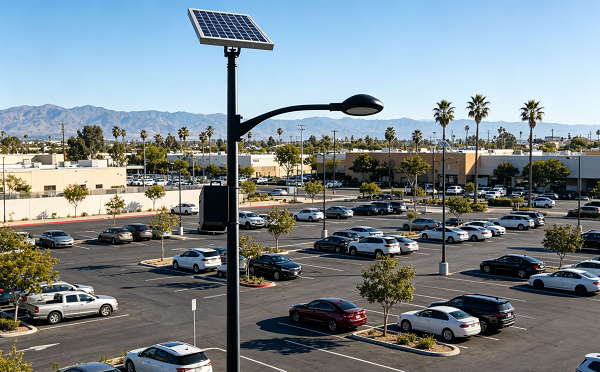
A commercial facility in Southern California — a high-traffic distribution and logistics operation — needed to light its parking lot for security, safety, and operational purposes. Dusk-to-dawn operation was required. The evaluation came down to two options: solar-powered units with portable bases, or a conventional grid-tied LED system requiring trenched underground conduit connecting back to SCE. The financial model was built from three inputs: actual installed equipment costs, the official Southern California Edison Schedule TOU-GS-1 Option E tariff (effective January 1, 2026, at $0.31/kWh for off-peak commercial service), and real federal tax benefit calculations. Electricity escalation was modeled at 10% annually — fully aligned with the original cost comparison model that produced $95,000 in 10‑year savings. (SCE raised commercial rates 12.9% in a single month – October 2025 – alone, so 10% is a reasonable and defensible assumption.)
Side-by-Side: The Full Comparison
Source: SCE Schedule TOU-GS-1 Option E, effective Jan 1, 2026 (Advice 5725-E, Resolution E-5217). Tax benefits assume C-Corp taxpayer; consult your tax advisor for actual eligibility. Three Numbers That Decide This Comparison
The Year-By-Year Cumulative PictureThe chart below shows cumulative after-tax cost by year. Solar starts higher — $195,000 upfront versus $122,000 for grid-tied. But after the federal Investment Tax Credit (30% = ~$58,500) and first-year bonus depreciation (~$35,000), the effective net cost of solar at the end of Year 1 is approximately $102,000. Grid-tied, after its own $26,000 in depreciation benefits, nets to ~$96,000. At this point the gap is only $6,000 — and from Year 2 onward, solar costs nothing to run while the grid-tied system accumulates an electricity bill that grows every year.
Note: Year 5 solar cost reflects the battery replacement: 40 units × $470 each = $18,800. This is the only known future cost for solar. It is already fully priced into the $120K 10-year total. The second battery cycle would fall around Year 10-11. Breaking Down the Solar Tax AdvantageThe reason solar crosses below grid-tied so quickly is the Year 1 federal tax benefit stack. For a C-Corp (the typical structure for a commercial property owner or facility manager), two benefits apply simultaneously:
Total Year 1 tax benefit: ~$93,000 — applied against a $195,000 gross investment, bringing the effective net cost to ~$102,000. Grid-tied equipment also qualifies for depreciation, producing approximately $26,000 in Year 1 tax benefit and reducing the net cost of the $122,000 grid installation to ~$96,000. After Year 1, the gap between the two options is only $6,000. And from that point forward, solar accrues no electricity bill. Grid-tied runs at an average of approximately $13,000 per year in electricity, escalating annually at 10%. Disclaimer: Tax benefit calculations assume C-corporation taxpayer and 2025–2026 IRS rules. Consult a qualified tax professional for your specific situation. This content is informational, not tax advice. The Electricity Cost: Why SCE's Rate History MattersThe grid-tied model uses 40 fixtures at an average draw of approximately 164 watts each, operating 12 hours per night. Annual consumption: approximately 26,280 kWh per year. At the SCE TOU-GS-1 Option E off-peak rate of $0.31/kWh effective January 2026, Year 1 electricity cost is approximately $8,147. The model applies a 10% annual escalation. Here is why that is conservative: SCE raised commercial rates 12.9% in October 2025 alone. Over the past decade, SCE commercial rates have risen approximately 83% cumulatively — an average compound rate well above 10% per year. The model is designed to be defensible, not optimistic. The real-world case for solar only gets stronger as you increase the escalation assumption.
What the Grid-Tied Option Actually Costs to InstallA common objection to solar is the higher upfront number: $195,000 versus $122,000. But this comparison is frequently incomplete. The $122,000 grid-tied figure assumes the property already has utility infrastructure readily available at the lot. For many commercial properties — especially new construction, expanded lots, or facilities without existing outdoor electrical service — the following additional costs apply to grid-tied installation:
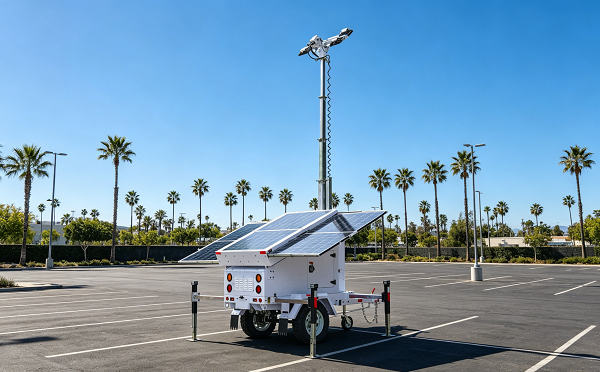
Solar's installation, by contrast, involves surface-mounted poles on portable bases — no digging, no permits for utility connection, no SCE coordination, and deployment measured in days rather than weeks. The Copper Theft Factor: An Unmodeled Risk That Tilts Further Toward SolarThe 10-year financial model above does not include the cost of copper wire theft incidents — because for this facility, solar eliminates that risk category entirely. But for a grid-tied installation in Southern California, the copper theft exposure is real and documented:
A grid-tied parking lot lighting system in Los Angeles or the broader Southern California region carries real, ongoing copper theft exposure. Every outage is a liability event, a repair cost, and a security failure. The 10-year financial model above is conservative: it does not price in a single copper theft event for the grid option. The actual risk is not zero. Source: CAO Independent Financial Analysis of the Revenue Requirements of the City Street Lighting System, March 14, 2025 (Matrix Consulting Group / City of Los Angeles) Portability: The Hidden Operational AdvantageOne factor that does not appear in financial models but matters significantly for commercial operations is flexibility. The solar units in this project use portable bases — no concrete foundations, no permanent commitment to the current lot layout. If the property owner expands, reconfigures, or changes the lot, the lights relocate. Grid-tied conduit is permanent. Every future layout change means excavation. For a high-traffic operational facility that may evolve over time, this is not a theoretical benefit — it is a real operational consideration that grid-tied infrastructure simply cannot match. The Climate Angle: For Facilities with ESG CommitmentsFor commercial tenants or owner-operators with sustainability reporting obligations — including Amazon's Climate Pledge (net-zero carbon by 2040) and similar Scope 2 emission reduction commitments — solar street lighting provides a measurable benefit. This installation eliminates approximately 26,280 kWh per year of grid electricity consumption, equivalent to removing approximately 3.7 passenger vehicles from the road annually. For facilities operating under ESG frameworks, RE100 commitments, or corporate sustainability targets, solar lighting directly supports Scope 2 reduction goals and aligns with procurement policies increasingly requiring carbon-neutral infrastructure.
The Bottom Line
► See how these numbers apply to your property. Request a free solar site assessment →
Most Popular
Industry News
Inspiring Projects
How Solar Lights Work
Solar Lighting Economics
|
ArchivesNo Archives Categories
Want More Info? |
LATEST NEWS & ARTICLES