How Solar Street Lighting Permanently Eliminates Copper Theft VulnerabilityPosted by Stephen Shickadance in Most Popular. Industry News. Inspiring Projects. Applications of Solar Lighting.
Understanding Why Grid-Tied Lighting Is Inherently Vulnerable
Traditional street and area lighting — whether fluorescent, HID, or LED — relies on a continuous supply of electricity through underground copper wiring that connects each fixture back to the utility grid. This infrastructure exists at predictable locations, is accessible via manholes or underground conduit, and carries consistent scrap value. For organized theft rings, it represents a reliable, repeatable target. Consider the economics from a thief's perspective: copper is currently trading at approximately $6.00 per pound on the COMEX exchange (January 2026). A commercial parking lot with 40 fixtures may have hundreds of feet of copper underground. The stolen wire can be sold to scrap dealers — and while California's AB 476 (signed by Governor Newsom in October 2025) has strengthened penalties and reporting requirements, enforcement takes time, and the criminal economics remain attractive as long as copper prices stay elevated. The result is a theft-repair-retheft cycle that property owners know all too well. The wire gets stolen. The lights go dark. A repair crew is dispatched. The wire is replaced. And weeks or months later, it happens again — sometimes at the same fixture.
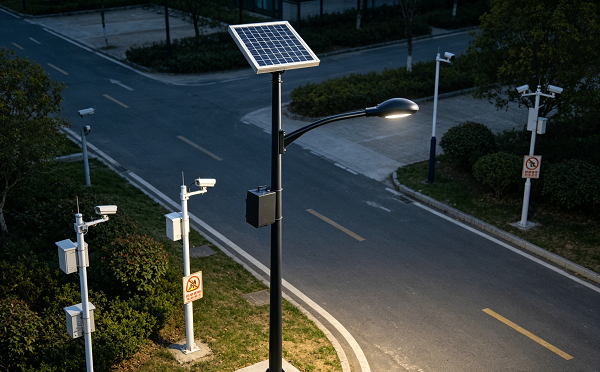
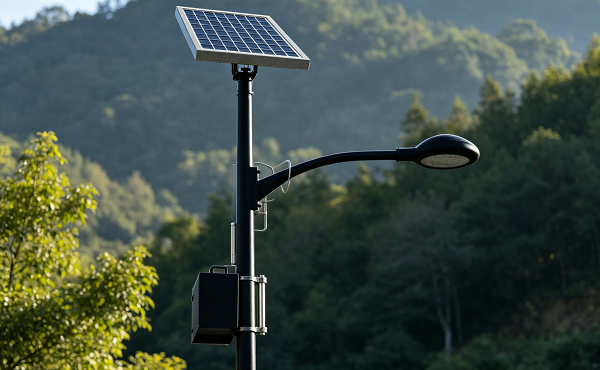
The Solar Solution: Architectural Immunity to Copper TheftSolar-powered street lighting breaks this cycle not through better security measures, heavier conduit, or more robust locks — but by eliminating the copper entirely. A solar streetlight is a self-contained system:
There is nothing underground to steal. No conduit running between poles. No feeder wire connecting back to a utility. The entire system is above grade, integrated within the fixture housing, and designed to resist tampering. What thieves target — buried copper — simply does not exist. What Happens When There Is No Copper to Steal?The Los Angeles city government has reached exactly this conclusion. Mayor Karen Bass announced in April 2026 that the city is replacing 60,000 streetlights with solar units specifically because solar lights contain no copper. The mayor stated directly: the goal is to eliminate the theft incentive entirely, not just to repair damage after the fact. This is the same logic that should drive commercial property decisions. Security through elimination is categorically more reliable than security through protection. You cannot protect copper wire that extends underground across a property perimeter from motivated, organized thieves. But you can architect lighting systems that have no copper to steal. Source: NBC Los Angeles, April 24, 2026 — https://www.nbclosangeles.com/news/local/los-angeles-streetlights-fee-ballots/3881341/ Beyond Theft Prevention: Additional Benefits of Solar Street Lighting1. Grid Independence and ResilienceSolar street lights operate independently of the utility grid. This means they remain fully operational during grid outages, power cuts, and utility disruptions — events that become more frequent as California's aging grid faces increasing stress. For warehouse operators, logistics centers, and 24/7 commercial facilities, this operational continuity is a significant advantage. 2. Elimination of Trenching CostsInstalling new grid-tied lighting in Southern California typically requires trenching for underground conduit. In urban settings, trenching costs range from $50 to $150+ per linear foot, depending on soil conditions, existing infrastructure, and permit requirements. For a parking lot perimeter of 600 linear feet, that alone represents $30,000 to $90,000 in installation cost before a single fixture is purchased. Solar eliminates this entirely — poles are surface-mounted and self-sufficient. 3. No Ongoing Electricity CostsOnce installed, solar street lights generate their own power from sunlight. The electricity cost of operating 40 grid-tied LED streetlights in Southern California — at approximately 150W per fixture, running 12 hours per night — is roughly 21,900 kWh per year. At the current commercial rate of approximately $0.20–$0.25/kWh in Southern California, that is $4,380–$5,475 annually, compounding over 10 years into $43,800–$54,750 in pure electricity savings alone. 4. ITC 30% Federal Tax CreditCommercial solar lighting systems are eligible for the Investment Tax Credit (ITC) under the Inflation Reduction Act, providing a 30% credit against federal tax liability on the cost of the system. For a $200,000 installation, this represents a $60,000 direct reduction in tax liability — transforming the economics of the upgrade significantly. Our Products: Engineered for Southern California ConditionsNot all solar street lights are equal. A critical consideration — especially for commercial security applications — is whether the fixture maintains full lumen output throughout the entire night. Many lower-cost solar lighting products dim to 30–50% output after midnight to conserve battery capacity. This defeats the security purpose of the lighting installation. Our products are specifically engineered to maintain 100% lumen output from dusk to dawn, designed for worst-case winter conditions in Southern California — when solar harvest is lowest and nights are longest. The system is sized and tested to ensure full brightness, every night, regardless of consecutive overcast days or seasonal variation.
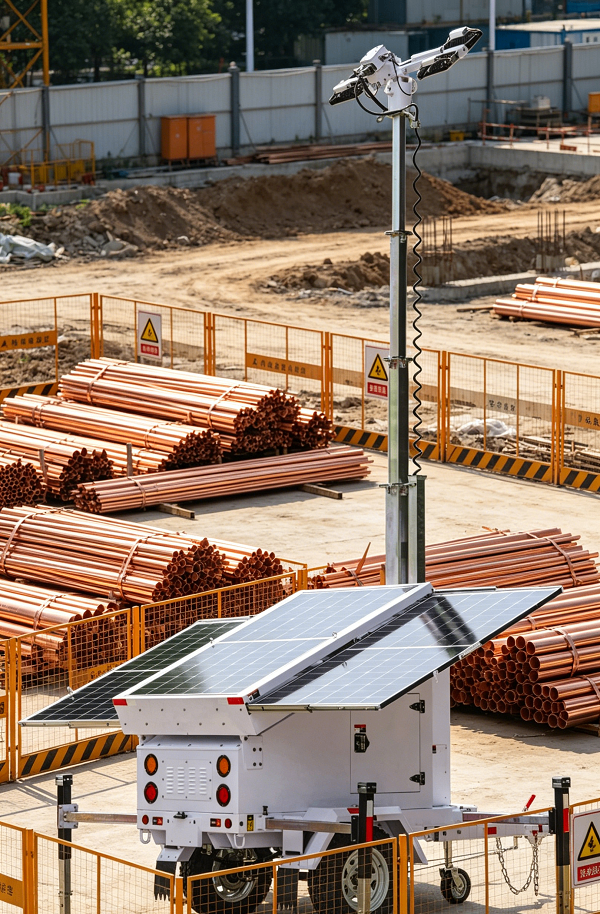
Recommended Model: Mobile Solar Lighting Tower
Summary: Why Solar Is the Only Permanent Solution
► Protect your property permanently. Request a free solar site assessment →
Most Popular
Industry News
Inspiring Projects
Applications of Solar Lighting
|
ArchivesNo Archives Categories
Want More Info? |
LATEST NEWS & ARTICLES