California Mining Sites Reduce Carbon Footprint with Solar-Powered Security LightingPosted by Stephen Shickadance in Most Popular. Industry News. Inspiring Projects. Applications of Solar Lighting.California is not just America’s most populous state—it’s also one of its most important mining jurisdictions. From the borax deposits of Searles Valley to the lithium brines of the Salton Sea, from aggregate operations in the Central Valley to gold exploration in the Mother Lode, California mines supply critical minerals essential for everything from electric vehicle batteries to aerospace components.
But mining in California comes with a unique challenge: the state has enacted some of the nation’s most aggressive greenhouse gas reduction targets. Senate Bill 32 (SB 32), signed into law in 2016, requires California to reduce greenhouse gas emissions to 40 percent below 1990 levels by 2030. The California Air Resources Board (CARB) has further charted a path toward net-zero emissions no later than 2045. For mining operations, every source of Scope 1 emissions—direct emissions from owned or controlled sources—is under scrutiny. Diesel light towers, long the industry standard for site security and operational lighting, are a significant and often overlooked contributor to those emissions. Solar-powered security lighting offers a proven, cost-effective solution that eliminates diesel emissions entirely while reducing operating costs and improving site safety. The Hidden Carbon Footprint of Diesel Light TowersDiesel light towers are ubiquitous on mining sites. They illuminate haul roads, equipment staging areas, security perimeters, and active work zones. But their convenience comes at a substantial environmental cost. A typical diesel light tower consumes 2–4 gallons of fuel per day, depending on runtime and lighting load. According to the U.S. Environmental Protection Agency’s 2025 Greenhouse Gas Emission Factors Hub, each gallon of diesel burned releases 10.21 kg of CO₂e. Over a year of operation, a single diesel tower generates approximately 7,500–15,000 pounds of CO₂. For a fleet of 20 towers, annual emissions can reach 150,000–300,000 pounds—all from temporary site lighting. These emissions are classified as Scope 1 under greenhouse gas accounting protocols, meaning they are direct emissions from sources owned or controlled by the mining operation. For California mines subject to CARB reporting requirements, diesel lighting represents an easily addressable source of emissions.
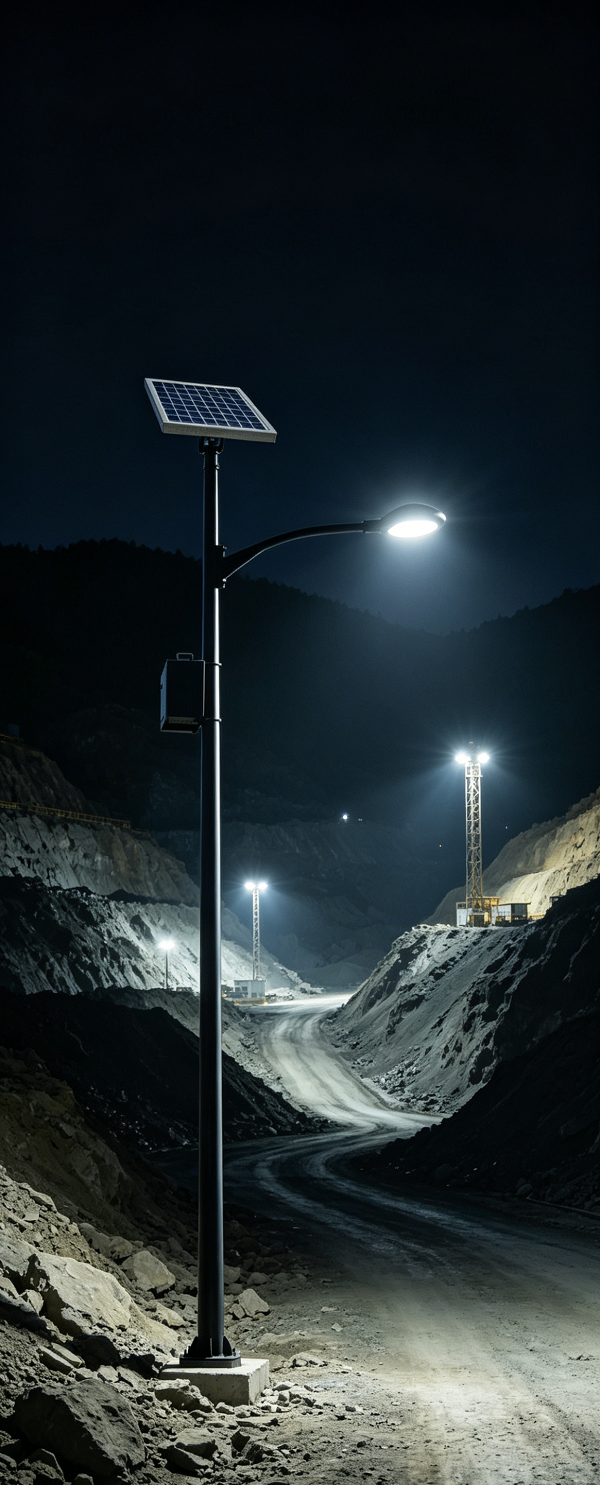
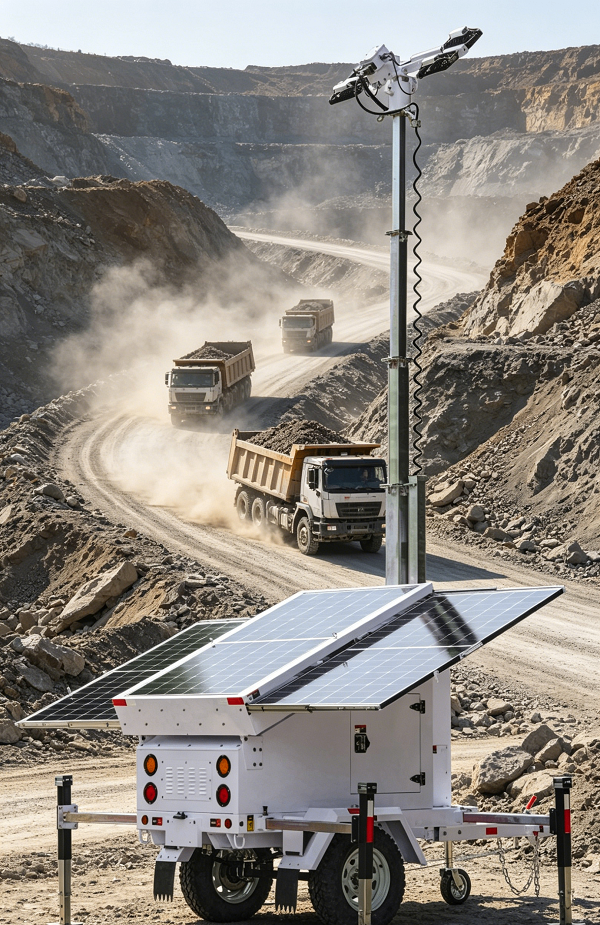
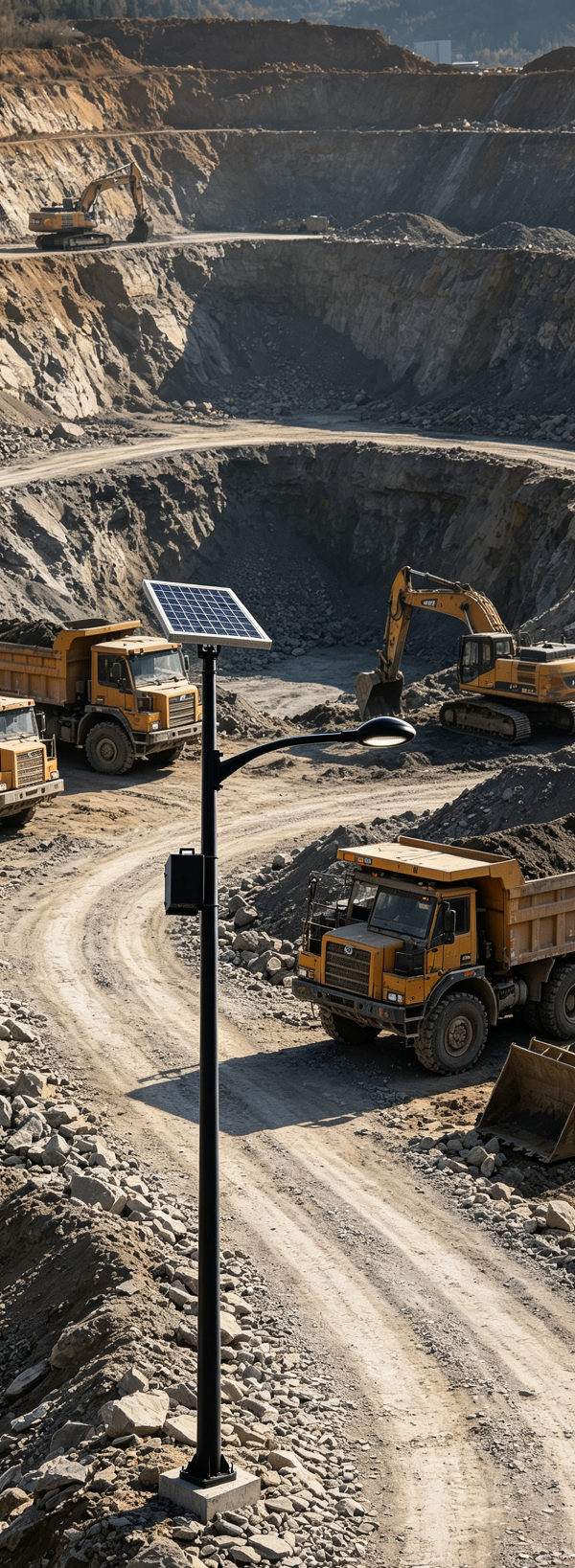
Moreover, diesel lighting carries hidden costs beyond carbon. Generators produce noise at 70–85 dB, disturbing nearby communities and interfering with crew communication. They emit particulate matter and nitrogen oxides, degrading air quality for workers. Fuel storage introduces spill risks and compliance burdens. And refueling logistics divert labor from core mining activities. California Mining Is Already Embracing SolarThe transition to solar energy in California mining is already underway—and at a scale that demonstrates its viability. In June 2025, Searles Valley Minerals (SVM), a century-old mining operation in Trona, California, announced a strategic partnership with GlassPoint Solar to transform its energy supply. The project involves the installation of 750 MW of advanced solar thermal technology designed to progressively replace coal- and gas-fired boilers at SVM‘s facilities, which process brine from Searles Lake to extract critical minerals including boron, potassium, sodium, and lithium. The impact is dramatic: the SVM project is expected to slash carbon emissions by up to 500,000 metric tons of CO₂ annually. SVM CEO Dennis Cruise noted that “the high costs of coal and the need for a stable and affordable source of energy motivated the partnership,” adding that GlassPoint‘s solution would deliver “immediate savings and long-term stability without compromising local employment”. While SVM’s project focuses on industrial process heat rather than security lighting, it demonstrates a critical point: California mining operations are actively seeking solar solutions to reduce their carbon footprint, lower costs, and protect jobs. Solar light towers represent the next logical step in this transition—a smaller-scale, rapidly deployable solution that can be implemented across any mine site without major capital investment. How Solar Light Towers Eliminate EmissionsSolar-powered security lighting eliminates the emissions associated with diesel towers entirely. By generating energy on-site from the sun—which California has in abundance—these systems produce zero Scope 1 emissions during operation. Our solar light towers are engineered for the demanding conditions of California mining sites, from the intense heat of the Mojave Desert to the temperature swings of the Sierra Nevada foothills. Key specifications include:
The emissions reduction is immediate and measurable. A mine replacing 20 diesel towers with solar units eliminates approximately 150,000–300,000 pounds of CO₂ emissions annually. Over the 5–7 year lifespan of the solar system, that equates to 750,000 to 2.1 million pounds of CO₂ avoided—a significant contribution to any mining operation‘s decarbonization goals.
Lower Costs, Faster PaybackSolar security lighting is not just an environmental choice—it’s a financial imperative. Diesel prices have become increasingly volatile, and delivered fuel costs in remote mining areas are substantially higher than retail pump prices. Solar light towers eliminate fuel expenses entirely. A typical California mining operation running 20 diesel towers spends $150,000–$300,000 on fuel alone over five years, plus tens of thousands more on maintenance, refueling labor, and fuel storage compliance. ESG Benefits Beyond Carbon ReductionCalifornia mining operations face increasing pressure from investors, regulators, and local communities to demonstrate strong ESG (Environmental, Social, Governance) performance. Solar security lighting delivers benefits across all three pillars: Environmental
Social
Governance
The displacement of diesel-fuelled lighting towers eliminates fossil fuel use and Scope 1 carbon emissions while reducing site lighting costs and eliminating noise, vibration, odor emissions, and the risk of hydrocarbon spills. A Blueprint for California MiningFor mines across California—from the borax operations of Searles Valley to the gold mines of Amador County, from the aggregate quarries of the Central Valley to the lithium projects of Imperial County—the path to lower emissions and lower costs is clear:
Leading California‘s Mining DecarbonizationCalifornia has set ambitious climate goals, and every sector—including mining—must contribute. Senate Bill 32’s target of 40% below 1990 levels by 2030 is approaching rapidly, and the path to net-zero by 2045 requires action today. Solar-powered security lighting offers a practical, immediately deployable solution that reduces emissions, lowers costs, and improves site safety. As SVM’s transition demonstrates, California mines are ready to embrace solar energy. Solar light towers are the next step—a scalable, cost-effective way to eliminate a significant source of Scope 1 emissions while improving operational efficiency. The question is no longer “Can solar work for mining?” It’s “Why is your mine still using diesel?” Ready to Reduce Your Mine’s Carbon Footprint?Contact us today for a free lighting simulation and customized cost comparison for your California mining operation. We’ll model your site, recommend the optimal tower configuration, and show you exactly how much you can save—including the 30% federal ITC tax credit. References
Most Popular
Industry News
Inspiring Projects
Applications of Solar Lighting
|
ArchivesNo Archives Categories
Want More Info? |
LATEST NEWS & ARTICLES