Why Mining States from Nevada to Alaska Are Switching to Solar Light TowersPosted by Stephen Shickadance in Most Popular. Industry News. The Basics. Inspiring Projects. Applications of Solar Lighting.From the sun-scorched deserts of Nevada to the snow-blanketed remote mines of Alaska, the U.S. mining industry is undergoing a quiet revolution in how it illuminates its worksites. For decades, diesel-powered light towers were the unchallenged standard—reliable in theory, but burdensome in practice, especially in the extreme and isolated conditions that define mining across the American West and North.
Today, mining operators from Nevada to Alaska are increasingly ditching diesel for solar light towers, driven by a perfect storm of cost savings, operational reliability, environmental compliance, and safety improvements. This shift isn’t a passing trend; it’s a strategic choice that addresses the unique challenges each mining state faces, from volatile fuel prices to harsh weather and strict regulatory demands. The first and most compelling reason mining states are switching to solar light towers is the relentless rise in U.S. oil and diesel prices. For remote mines—whether in Nevada’s vast desert basins or Alaska’s Arctic regions—fuel delivery is not just expensive; it’s logistically fraught. Diesel must be transported hundreds of miles over rough terrain, often in extreme weather, adding layers of cost and risk. A single diesel light tower can cost upwards of $1,000 per month in fuel alone, a burden that has grown heavier as oil prices fluctuate and rise. Solar light towers eliminate this expense entirely: they run on free, renewable sunlight, cutting operational costs by 70–80% compared to diesel alternatives. For cash-strapped mining operations, this isn’t just a savings—it’s a lifeline, allowing funds to be redirected to core operations, safety upgrades, and sustainability initiatives. Across the United States, mining is essential. It supplies the gold, copper, lithium, coal, and critical minerals that power our economy, our technology, and our energy transition. But the way mines have traditionally lit their sites – with diesel light towers – is becoming obsolete. Rising fuel prices, extreme weather, environmental mandates, and safety demands are driving a fundamental shift. From Nevada’s Carlin Trend to Alaska’s interior gold fields, from Colorado’s high country to West Virginia’s coal country, mining states are switching to solar light towers. Here’s why.
Extreme Cold? No Problem. Solar Towers Are Built for Alaska.Many assume solar doesn’t work in Alaska’s dark, frigid winters. That’s a myth. Modern solar light towers are engineered specifically for extreme conditions.
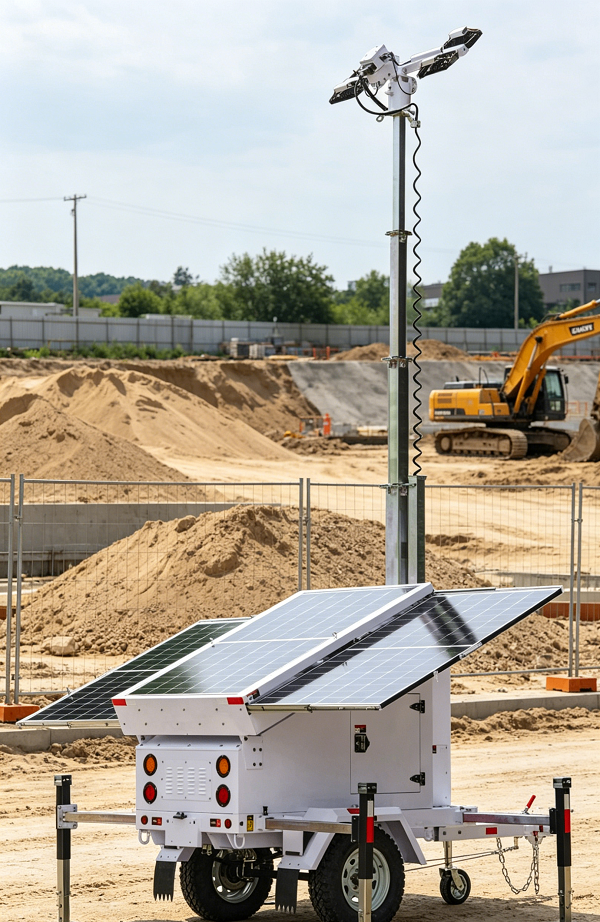
Alaska mines that have switched report reliable operation even at -40°F, with dramatic reductions in logistics costs (no more ice‑road fuel deliveries) and maintenance (no more frozen diesel engines). View more details: Alaska Mining Operations Rely on Solar Light Towers for Extreme-Condition Security Nevada’s Remote Sites Eliminate Costly Fuel DeliveriesNevada is home to some of the world’s richest gold deposits – and some of the most remote mine sites. The Carlin Trend stretches for 40 miles across high desert. Cortez, Lone Tree, and other operations are hours from the nearest fuel terminal. Every gallon of diesel must be trucked over two‑lane highways and unimproved roads. When winter storms close mountain passes or summer wildfires block access, refueling stops – and diesel towers go dark. Solar light towers free mines from this supply chain. They generate power on‑site, using Nevada’s 250+ sunny days per year. No fuel trucks. No storage tanks. No spill risks. Just reliable, silent lighting. One Carlin Trend gold mine replaced 15 diesel towers with 12 solar units after a lighting simulation, saving over $100,000 annually and eliminating weekly fuel runs. View more details: How Nevada Mines Can Cut Fuel Costs and Logistics with Solar Security Lighting Colorado Mines Meet ESG Goals with Zero EmissionsColorado has enacted some of the nation’s most aggressive climate targets: 50% greenhouse gas reduction by 2030, 65% by 2035, net zero by 2050. Mining companies face mounting pressure from regulators, investors, and communities to cut Scope 1 emissions. Diesel light towers are a direct source of Scope 1 emissions. A single tower burning 3 gallons per day releases about 10,000 pounds of CO₂ annually. A fleet of 20 towers emits 200,000 pounds per year – all from temporary lighting. Solar towers produce zero emissions. By switching, Colorado mines can immediately reduce their carbon footprint, improve their ESG scores, and demonstrate progress toward state mandates – without complex carbon offsets or credits. View more details: Colorado Mines Achieve ESG Goals with Zero-Emission Solar Security Lighting West Virginia Coal Mines Improve Safety with Better LightingPowered haulage accidents are the leading cause of mining fatalities nationwide. In 2025, they killed 13 miners – six of them in West Virginia alone. Poor illumination on haul roads, around equipment, and at loading zones is a direct contributing factor. Solar light towers provide high‑output, uniform lighting that diesel units often fail to deliver. Our LED fixtures produce 29,000–58,000 lumens per tower. The mast extends up to 20 feet, eliminating dark zones. And because solar towers run every night without interruption – no fuel shortages, no engine failures – safety lighting is always on. West Virginia mines that have switched report fewer near‑misses and improved operator visibility. The 30% ITC Tax Credit Accelerates PaybackSolar lighting systems qualify for the 30% federal Investment Tax Credit (ITC) under Section 48 of the Inflation Reduction Act. For a mining operation, this reduces upfront capital expenditure by nearly one‑third. Example: A 20‑tower solar fleet with an installed cost of $252,000 (after ITC) would have a pre‑credit cost of $360,000. The ITC saves $108,000 – enough to buy several additional towers or fund other site improvements. Combined with fuel and maintenance savings, the payback period for solar light towers typically falls between 12 and 18 months. After that, the savings go straight to the bottom line. Silent, Non‑Intrusive Operation Improves Community RelationsMines often operate near communities – or on tribal lands where noise and ground disturbance are sensitive issues. Diesel generators run at 70–85 dB, audible for miles. Solar towers are completely silent. Because solar towers require no trenching or concrete foundations (they are trailer‑mounted), they preserve ground integrity. This is especially important on Indian reservations and environmentally sensitive areas. The Arizona soccer club case study is a perfect example: a tribal community wanted to eliminate diesel noise and exhaust while keeping the ground undisturbed. Mobile solar towers delivered exactly that – and a lighting simulation reduced the needed tower count from 13 to 8, saving thousands in upfront costs. A Smarter Way to Light America’s MinesFrom Nevada to Alaska, Colorado to West Virginia, mining states are switching to solar light towers because they work better, cost less, and align with the future of responsible mining. From Nevada’s deserts to Alaska’s frozen north, mining states are switching to solar light towers because they solve the industry’s most pressing pain points: high fuel costs, unreliable diesel equipment, safety risks, and environmental compliance. Solar isn’t just a “green” alternative—it’s a practical, cost-effective solution that aligns with the unique challenges of each mining state. As oil prices continue to fluctuate and regulations grow stricter, the shift to solar will only accelerate. For mining operators across the U.S., solar light towers aren’t just a choice—they’re the future of reliable, safe, and efficient worksite lighting.
Most Popular
Industry News
The Basics
Inspiring Projects
Applications of Solar Lighting
|
ArchivesNo Archives Categories
Want More Info? |
LATEST NEWS & ARTICLES