Why Solar Street Lighting Is the Next Must-Have Amenity in New-Home DevelopmentsPosted by Stephen Shickadance in Most Popular. Industry News. Inspiring Projects. Applications of Solar Lighting.Today’s homebuyers pay a premium for energy independence, lower HOA fees, and resilience. Solar street lighting delivers all three – and it’s transforming how developers market communities. The Amenity Homebuyers Didn’t Know They NeededFor decades, street lighting was an afterthought – a utility, not a feature. Developers installed the cheapest grid‑tied fixtures available, buried copper wire, and never mentioned lighting in their sales brochures. Homebuyers assumed streets would be lit and never asked questions. That era is over.
In 2026, a growing number of master‑planned communities, infill developments, and active adult neighborhoods are using solar street lighting as a deliberate selling point. The shift is driven by three converging trends: rising electricity costs, increasing grid instability, and a generational preference for sustainable, low‑maintenance infrastructure. What was once invisible is now a competitive advantage. The Numbers Tell a Clear StoryHomebuyer sentiment has shifted dramatically. According to a 2025 survey by Zonda (formerly Meyers Research), 71% of new‑home buyers consider “energy‑efficient community infrastructure” as important or very important – ranking it above clubhouses, pools, and walking trails. Among buyers aged 25–44, that number rises to 79%. More telling: 43% of respondents said they would pay an additional 2–3% in home price for a development with off‑grid sustainable lighting, citing lower future HOA fees and greater resilience.
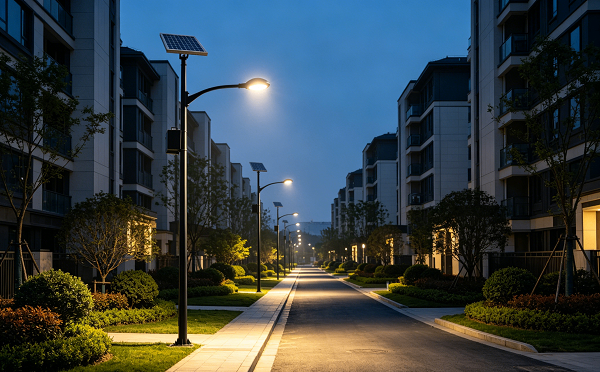
First Impressions Are Formed at DuskModel home tours rarely happen at 2 PM. Buyers visit after work, in the late afternoon – and often linger into the evening. That first drive through the neighborhood at dusk is a powerful, subconscious evaluation. Grid‑tied lighting is often uneven. Older subdivisions suffer from dark spots where fixtures fail or where budgets couldn’t afford full coverage. Solar lighting, by contrast, is easy to deploy exactly where design requires it: along entrance boulevards, around model home complexes, at community mail kiosks, and on pedestrian paths. Resilience Is Becoming a Deal‑BreakerThe past five years have normalized power outages. Whether from California’s Public Safety Power Shutoffs (PSPS), Texas’s winter storm blackouts, Florida’s hurricane‑related grid failures, or the Northeast’s aging infrastructure, buyers have experienced – or heard stories of – neighborhoods plunged into darkness.
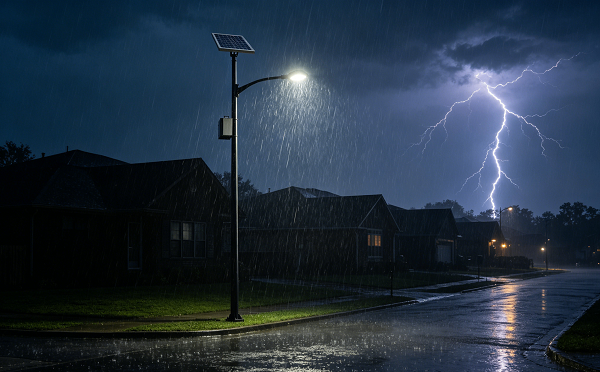
Solar streetlights don’t go dark when the grid fails. Each unit has 3–5 nights of battery autonomy. During an extended outage, these streets remain fully lit while surrounding neighborhoods become dangerous, unlit voids. For families with children, elderly residents, or anyone who has experienced a multi‑day outage, this is not a nice‑to‑have – it’s a requirement. Developers in fire‑prone, hurricane‑prone, or winter‑storm‑prone regions are increasingly specifying solar lighting in their site plans and marketing it explicitly. Sales collateral now includes language like: “Even when the power grid goes down, our streets stay safe and bright – powered entirely by the sun.” Beyond Lighting: Solar Poles as Smart‑City HubsThe technology has advanced. Modern solar streetlight poles can integrate additional capabilities that add further value to new developments:
These value‑added features were once prohibitively expensive because they required trenching for power and data. Solar poles eliminate that barrier – turning a simple light fixture into a multi‑function community asset. Early‑adopter developers in markets like Austin, Denver, and Raleigh are already piloting solar poles with integrated Wi‑Fi and cameras, marketing their communities as “smart, safe, and sustainably powered.” What Developers Should Look for in Solar Street LightingNot all products are equal. Based on feedback from builders, HOAs, and lighting engineers, here is a practical specification checklist:
Developers should also ask suppliers for reference communities of similar density and climate. Marketing Solar Lighting to Modern BuyersOnce the solar lighting system is installed, developers must actively promote it. Here are five proven tactics:
The goal is to convert an invisible utility into a visible, memorable feature that differentiates the development. Solar Lighting and Changing RegulationsSeveral states and municipalities are updating building codes to address climate resilience and energy efficiency. California’s Title 24 already encourages on‑site renewable generation; similar provisions are being considered in Colorado, Washington, and New York. Installing solar street lighting now positions a development ahead of future code requirements, avoiding costly retrofits later. It also improves a project’s score under green building certification programs like LEED for Neighborhood Development, Enterprise Green Communities, and the National Green Building Standard. Reduced Crime & Better Quality of LifeWell-lit neighborhoods naturally experience lower rates of trespassing, vandalism, and property crime. Dim, shadowy streets create hiding spots and discourage outdoor activity. Solar streetlights provide even, full-coverage lighting across sidewalks, parking areas, common spaces, and home frontages. The consistent visibility makes residents feel safer walking at night, letting kids play outdoors later, and encouraging more community interaction. This improved quality of life directly increases resident satisfaction and helps maintain higher property values long after build-out. A Different Kind of StreetlightThe homebuyer of 2026 is not the homebuyer of 2016. They ask tougher questions, value resilience, and calculate long‑term carrying costs. Solar street lighting addresses all of those concerns – while enhancing curb appeal, reducing HOA fees, and keeping streets safe during blackouts. For developers, the choice is clear: continue paying to bury copper and then paying again to light it – or switch to a solution that saves money, attracts buyers, and builds a lasting competitive advantage. Solar street lighting is no longer an alternative. It is the new standard for homes that sell faster, at higher prices, to happier residents.
Most Popular
Industry News
Inspiring Projects
Applications of Solar Lighting
|
ArchivesNo Archives Categories
Want More Info? |
LATEST NEWS & ARTICLES