Alaska Mining Operations Rely on Solar Light Towers for Extreme-Condition SecurityPosted by Stephen Shickadance in Most Popular. Industry News. Inspiring Projects. Applications of Solar Lighting.Alaska’s mining industry operates in one of the harshest environments on the planet: remote sites, sub-zero temperatures (often dropping below -40°F), short winter daylight hours, heavy snowfall, and virtually no access to grid power. For mining operators, rental fleets, and site managers here, reliable security lighting isn’t just a “nice-to-have”—it’s a matter of safety, compliance, and operational continuity. When darkness falls over Alaska’s mines, unlit perimeters, haul roads, and work zones pose serious risks: trespassing, equipment theft, safety hazards for night shifts, and potential regulatory violations.
The Alaska Mining Reality: Remote, Cold, and ExpensiveAlaska is home to some of the world’s richest mineral deposits: gold at Fort Knox and Pogo, zinc at Red Dog, and copper at the developing Ambler district. But operating here comes with brutal logistics.
For these operations, every gallon of diesel must be flown in, barged, or trucked over treacherous ice roads. A single fuel delivery can cost five to ten times what it would in the Lower 48 – when it’s possible at all.
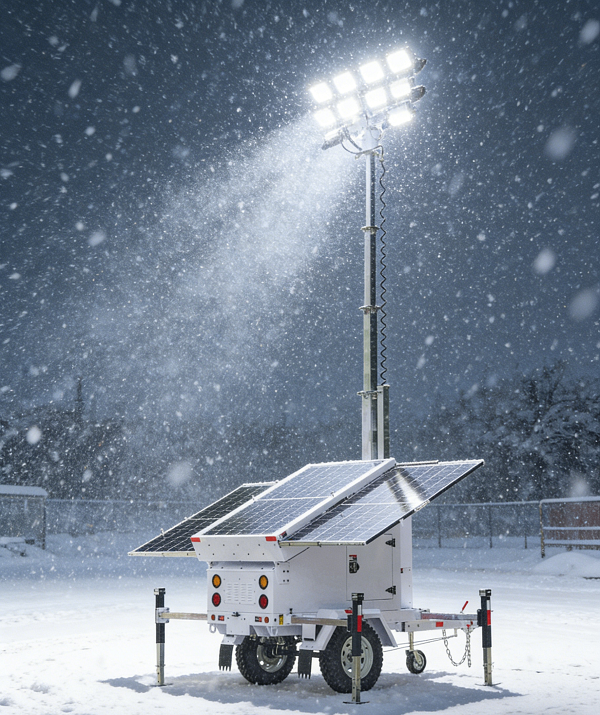
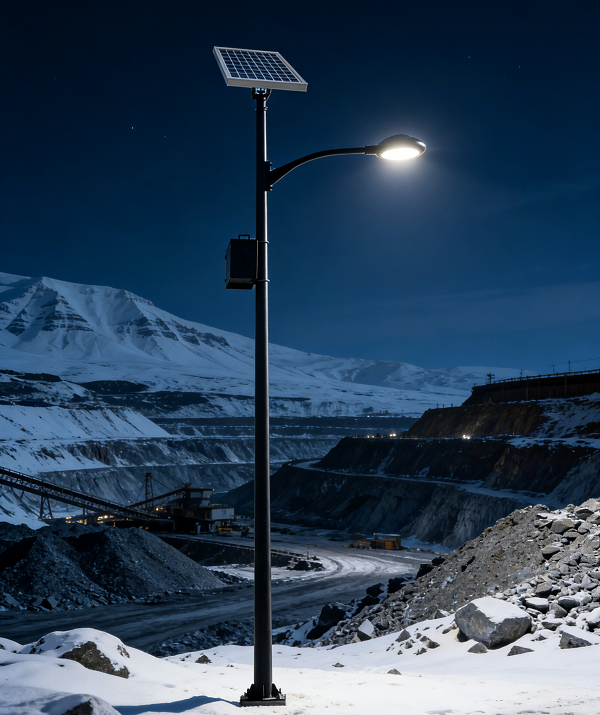
Why Diesel Light Towers Struggle in AlaskaDiesel equipment is notoriously unreliable in extreme cold. Here’s what goes wrong: 1. Fuel GellingDiesel fuel contains paraffin wax that crystallizes at low temperatures. At -10°F, untreated diesel begins to gel, clogging filters and fuel lines. At -40°F, even treated fuel can turn into sludge. Mine operators must add expensive anti‑gel additives or use #1 diesel – which has less energy content and is harder to find. 2. Battery FailureLead‑acid starting batteries lose up to 60% of their cranking power at -20°F. Diesel light towers that sit idle for even a few hours may not restart without a boost – a major problem for security lighting that must work on demand. 3. Engine Heat LossDiesel engines require heat to operate. In Alaska’s interior, block heaters are mandatory, meaning each tower must be plugged in when not running. That requires electrical infrastructure that many remote sites lack. 4. Maintenance NightmaresCold‑weather maintenance is a time‑consuming, miserable job. Oil changes require heated bays. Frozen hydraulic lines break. Rubber seals crack. Every service call means sending a technician into the cold – a safety risk in itself. 5. Fuel Delivery RisksHauling fuel over ice roads is dangerous. Trucks break through. Drivers get stranded. Spills are catastrophic in sensitive Arctic ecosystems. And when a blizzard hits, deliveries stop – and lights go dark. The Solar Alternative: Built for Alaska’s Extreme ConditionsSolar light towers might seem counterintuitive for a region with 20 hours of darkness in December. But modern systems are engineered specifically for high‑latitude, extreme‑cold environments. Cold‑Weather Battery TechnologyOur systems include gel lead-acid deep cycle batteries, engineered to withstand ultra-cold temperatures (down to -40°F) and fluctuating weather conditions—ideal for northern Alaska’s harsh winters. No Moving Parts to FailOur towers have no engines, no fuel pumps, no injectors, and no hydraulic systems. The only moving parts are the optional manual mast lift. This simplicity is a superpower in the Arctic: nothing to freeze, nothing to break, nothing to maintain in subzero conditions. Autonomous Operation, No Fuel LogisticsOnce deployed, solar towers require no fuel deliveries, no refueling labor, and no fuel storage. For an Alaska mine spending $10–$20 per gallon for delivered diesel, this is a game‑changer. The savings quickly pay for the equipment – often in less than 12 months. Designed for Low Sun and Long NightsYes, Alaska has dark winters. But our systems are sized with generous battery banks that provide 3–5 nights of autonomy. During the short winter days, even low‑angle sunlight – or diffuse light through clouds – generates enough power to recharge. And during the summer, 24‑hour daylight fully charges the batteries, storing excess energy for the lean months. Our solar panels are mounted at optimal angles to capture every available photon, critical for high‑latitude sites where grid access is nonexistent. Security Lighting: More Than Just IlluminationFor remote Alaska mines, security lighting serves multiple critical functions: 1. Perimeter SecurityMines hold millions of dollars in equipment, supplies, and product. Reliable lighting deters theft, vandalism, and unauthorized access. Solar towers provide consistent illumination regardless of fuel availability. 2. Worker SafetyShift changes happen in the dark. Haul roads, equipment yards, and maintenance areas must be well lit to prevent accidents. Our high-performance LED fixtures utilize 50–100W LED chips, producing 7,250–14,500 lumens of bright, uniform light—equivalent to a 175W metal halide fixture with up to 70% less energy consumption. 3. Emergency ResponseIn the event of an incident – fire, injury, or spill – immediate lighting is essential. Solar towers are always ready, with no need to start a cold engine or wait for a fuel delivery. 4. Regulatory ComplianceMSHA and state regulations require adequate illumination for active work areas. Solar towers help mines meet these standards without the compliance burden of fuel storage and emissions monitoring.
For decades, diesel light towers were the only option for Alaska’s remote mines—but they’re a costly, logistically challenging solution in extreme cold. Fuel delivery to isolated sites is expensive and risky (think snowstorms, icy roads, and limited access), maintenance is frequent (diesel engines struggle in sub-zero temps), and ongoing fuel costs eat into profit margins. Today, high-performance LED solar light towers have become the backbone of Alaska mining security—engineered specifically to thrive in the state’s brutal conditions, while cutting costs and simplifying operations. When it comes to meeting Alaska’s mining lighting needs, the decision often boils down to two options: long-term diesel rentals or purchasing a solar powered light tower for sale. While rentals may seem like a convenient short-term fix, investing in solar light towers outright delivers far greater value over time—from significant cost savings and full asset ownership to off-grid flexibility and eligibility for federal incentives. What truly sets our high-performance LED solar lighting towers apart, however, is the intentional, Alaska-focused engineering that powers their reliability, efficiency, and versatility. Every component, from the solar panels and batteries to the LED fixtures and structural design, is engineered to thrive in Alaska’s harshest mining conditions, deliver consistent performance, and maximize long-term value for our customers. At the core of our high-performance LED solar lighting tower is a precision-engineered solar energy system designed to capture and store energy efficiently—even in Alaska’s challenging light conditions. We use high-efficiency monocrystalline solar panels, to maximize sunlight absorption—delivering up to 23% conversion efficiency, far above industry averages. This is critical in Alaska, where winter days are short and sunlight is limited; our towers can generate and store enough energy to power bright, consistent security lighting for 12–14 hours per night, even on cloudy days or during the darkest winter months. Our solar panels are mounted at optimal angles to ensure maximum energy capture regardless of season, engineered to tilt at optimal angles for Alaska’s latitude—ensuring maximum energy capture regardless of the season, and critical for remote mining sites where grid access is nonexistent. Complementing the solar system is our advanced battery technology—a cornerstone of the tower’s reliability in Alaska’s extreme cold. We offer two specialized battery options, engineered for distinct climate needs to ensure year-round functionality: high-density lithium-ion batteries for our Allta Pro models (optimized for milder summer conditions in southern Alaska) and batteries for our Supera and Brighta models, engineered to withstand ultra-cold temperatures (down to -40°F) and fluctuating weather conditions—perfect for northern Alaska’s brutal winters. The battery systems are sealed, maintenance-free, and designed with deep-cycle technology—allowing them to discharge and recharge repeatedly without degrading performance, even with daily use in freezing temps. The battery bank is also integrated with an intelligent charge controller, engineered to prevent overcharging and deep discharge, extending battery life to 5–7 years and reducing long-term maintenance costs—a key advantage over rental diesel units that often use outdated, poorly maintained batteries (which frequently fail in sub-zero weather). The LED lighting system is another engineering highlight, designed to deliver maximum brightness, energy efficiency, and durability for Alaska’s mining security needs. Our high-performance LED fixtures are engineered with 150W–300W LED chips, producing 15,000–30,000 lumens of bright, uniform light—equivalent to a 1000W metal halide bulb, but with 70% less energy consumption. The LEDs are encased in a rugged, IP67-rated housing, engineered to resist snow, ice, dust, water, and impact—critical for Alaska’s mines, where equipment is exposed to blizzards, freezing rain, and rough handling. We also integrate a dimming feature, engineered to allow users to adjust light intensity based on need (e.g., lower brightness for overnight security patrols, higher brightness for active work zones), conserving battery power and extending operational time—perfect for Alaska’s long winter nights. Structural engineering is equally critical to our tower’s performance in Alaska’s rugged terrain. Our solar lighting towers feature a lightweight yet durable steel frame, engineered to be portable (easily towed via truck or SUV) while supporting the weight of solar panels, batteries, and LED fixtures—even under heavy snow loads.The mast extends up to 20 feet, allowing the fixtures to illuminate approximately 10,000–20,000 square feet—minimizing dark spots and ensuring full site coverage for security. The base is designed with stabilizing legs, engineered to provide maximum stability on uneven, snow-covered, or icy terrain—a common challenge on Alaska’s mining sites. This structural design not only ensures safe, reliable deployment but also makes the towers easy to set up in hours (vs. weeks for traditional wired lighting), reducing project timelines and disruption—even in winter. Beyond individual components, our solar lighting towers are engineered with system integration in mind—ensuring seamless operation and minimal maintenance, even in remote Alaska. The entire system (solar panels, batteries, LED fixtures, and charge controller) is integrated into a single, compact unit, with no complicated wiring or external components. This plug-and-play design is intentional: it allows for fast deployment, easy relocation between mining zones (critical as Alaska’s mines expand or shift), and minimal maintenance—mostly brushing snow off solar panels and checking battery health. Unlike diesel-powered rental units, which have complex engines with dozens of moving parts (prone to freezing and breakdowns in Alaska’s cold), our solar towers have only a handful of moving components, reducing the risk of breakdowns and downtime—critical for time-sensitive mining projects where reliability is non-negotiable. This engineering excellence directly translates to the financial and operational advantages that make purchasing our solar lighting towers a better choice than long-term rentals for Alaska’s mines. The efficient solar and LED systems eliminate fuel costs entirely—no more expensive, risky fuel deliveries to remote sites. The durable, low-maintenance design reduces ongoing expenses—helping Alaska mining operations recoup their investment in 12–24 months compared to diesel rental costs. The 30% Federal Solar Investment Tax Credit (ITC), available to purchasers (but not renters), further reduces upfront costs, while the tower’s 10–15 year lifespan ensures long-term savings and asset value. For rental fleets serving Alaska’s mining industry, the engineered durability and cold-weather performance mean our towers can withstand heavy use across multiple remote projects, delivering consistent value to clients and setting rental companies apart from competitors relying on outdated diesel units that fail in extreme cold. Sustainability is also baked into our engineering process—an important consideration for Alaska’s mining industry, which faces growing pressure to minimize environmental impact in sensitive Arctic and sub-Arctic ecosystems. By eliminating diesel fuel and reducing energy consumption, our solar lighting towers produce zero greenhouse gas emissions and operate quietly—aligning with environmental regulations and sustainability goals for mining companies. The durable components and long lifespan also reduce waste, making our towers a more eco-friendly choice than rental units that are often discarded or replaced after heavy use (and can leak fuel, posing a risk to Alaska’s pristine landscapes). For Alaska mining operations that require reliable, cost-effective security lighting for more than 6–12 months, the engineering behind our high-performance LED solar lighting towers makes them an unmatched investment. Every design choice—from the high-efficiency solar panels and cold-optimized batteries to the rugged structural frame and seamless system integration—is engineered to deliver value, reliability, and flexibility in Alaska’s extreme conditions. As diesel prices continue to rise and environmental regulations become stricter, our solar lighting towers aren’t just a smart financial decision—they’re a future-proof solution, engineered to meet the evolving needs of Alaska’s mining operations, rental fleets, and remote site managers.
Most Popular
Industry News
Inspiring Projects
Applications of Solar Lighting
|
ArchivesNo Archives Categories
Want More Info? |

LATEST NEWS & ARTICLES